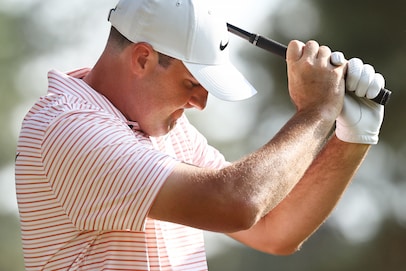
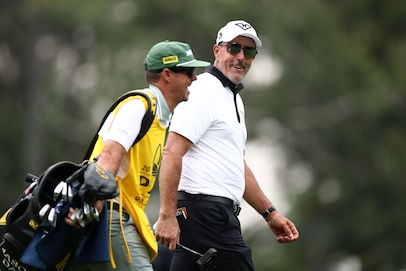
It was an afternoon that perfectly encapsulated his career—a man who had repeatedly courted self-inflicted chaos finally breaking through amid the swirling confusion around him. The very audacity that had so often proved his undoing, combined with talent that had promised something like this was possible, finally delivered Dustin Johnson the moment that seemed inevitable.
The 2016 U.S. Open is remembered more for those who bungled it than for who conquered it. A rules decision by the USGA created what the governing body called a "distraction" during the tournament's climactic hours, casting a pall of uncertainty over golf's most demanding championship. This wasn't merely another officiating mistake—those can be forgiven, filed away as human error. This was the crescendo in a symphony of unforced errors by the USGA, organizational failures that seemed to plague only this major championship while the Masters, Open Championship and PGA Championship maintained their dignity. This pattern of blunders reached its nadir two years later at Shinnecock Hills, ultimately forcing a transformation of how professional golf is officiated and triggering wholesale leadership changes within the organization. While the Oakmont Open’s legacy as a cautionary tale about governance is understandable—particularly given how the USGA has rebuilt itself over the past decade—focusing solely on the bureaucratic chaos commits a disservice to the champion who rose above the madness.
By 2016, Johnson had already lived several professional lifetimes in his decade on tour. Within months of turning professional in 2007, he secured his tour card at Q-School and captured his first victory at the end of his rookie season, followed by a triumph at the AT&T Pebble Beach Pro-Am just months later. Watching him play, it was impossible not to wonder where this phenomenon might ascend—not just because of the results, but because of the effortless manner in which he achieved them and the commanding presence he brought to every shot.
In an era increasingly defined by raw power, Johnson stood as perhaps its most devastating practitioner. His 6-foot-4 frame moved with the fluid grace of a natural athlete, combining crushing distance with surgical precision around the greens and an aggressive philosophy that ensured his physical gifts never went to waste. He possessed a game seemingly calibrated for every test golf could devise, a versatile arsenal that should have dominated every major venue.
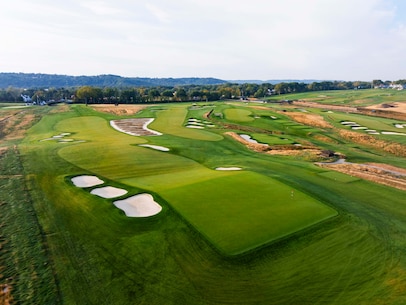


There was something cinematic about Johnson—the stoic swagger, the nonchalant demeanor, the unflappable composure that evoked a gunslinger from the Old West. When Johnson was locked in, which happened with frequency, he made this difficult game look impossibly simple.
That easy-going temperament, coupled with his humble origins as a country boy from South Carolina navigating the rarefied air of a country-club sport, made Johnson a magnetic figure. He arrived at Oakmont in 2016 at 31-years-old with nine tour victories and 11 top-10 finishes in major championships—statistics that painted the portrait of a player on the cusp of greatness.
Yet Johnson's narrative was haunted not by what he had accomplished, but by what had slipped through his fingers in moments of supreme opportunity. The disappointments weren't merely setbacks—they were implosions that seemed to follow a cruel script. At the 2010 U.S. Open at Pebble Beach, he held a three-shot lead entering the final round, only to triple bogey the second hole and double bogey the third en route to an 82 that left observers wondering if they had witnessed a collapse or a complete breakdown.

Dustin Johnson takes a drop during the final round of the 2010 U.S. Open at Pebble Beach. Holding the 54-hole lead to start the day, Johnson shot an 80.
Jeff Gross

Dustin Johnson mistakenly ground his club in the sand on the 72nd hole at the 2010 PGA cost him a spot in a playoff.
Getty Images

Johnson had a eagle putt on the 72nd hole in the 2015 U.S. Open at Chambers Bay to win, but three-putted, handing Jordan Spieth the title.
Andrew Redington/Getty Images
Two months later in the PGA Championship at Whistling Straits, Johnson found himself in a playoff scenario on the final hole, only to ground his club in what he believed was trampled dirt but was actually designated as a bunker—a penalty that eliminated him from a playoff. The following year at the Open Championship at Royal St. George's, Johnson mounted a stirring final-round charge against Darren Clarke, only to send a 2-iron sailing out of bounds from the 14th fairway, watching his claret jug dreams disappear.
Perhaps most heartbreaking was the 2015 U.S. Open at Chambers Bay, where Johnson faced a 12-foot eagle putt on the 72nd hole that would have delivered his first major championship. Instead he three-putted, gifting the title to Jordan Spieth.
These weren't the only near-misses—there were quieter disappointments like leading the 2015 Open Championship after 36 holes only to stumble with consecutive 75s—but each added weight to the belief that Johnson lacked the crucial ingredient that separates great players from champions. Critics whispered that the very poise and simplicity that made Johnson so consistently excellent became liabilities on golf's biggest stages. Major championships, they argued, demand something extra—a heightened awareness, an ability to recalibrate for the magnitude of the moment—and Johnson seemed either unable or unwilling to break from his measured cadence. The perception took hold that when the pressure reached its peak, Johnson's legendary cool became problematic detachment.
Johnson's struggles extended beyond the ropes. Questions swirled about his dedication, whether golf was merely a means to finance a lifestyle rather than a consuming passion. The most serious concerns emerged in 2014 when he took a voluntary leave of absence to address what was termed "personal challenges."
Reports surfaced alleging multiple failed drug tests over five years, including one that supposedly caused his withdrawal from the 2012 Masters (previously attributed to a back injury). Johnson and his representatives vehemently denied these reports, and the PGA Tour supported their position, insisting his absence wasn't disciplinary and that no substance abuse issues existed. Johnson's past did include some troubling episodes—a DUI arrest and an incident where he was coerced into purchasing ammunition for someone later charged with murder—and whispers persisted in golf circles that Johnson's off-course activities were undermining his on-course potential, creating an unfair but persistent idea that his talent was being squandered on late nights and poor decisions. (Johnson, through his agent, declined an interview request for this story.)
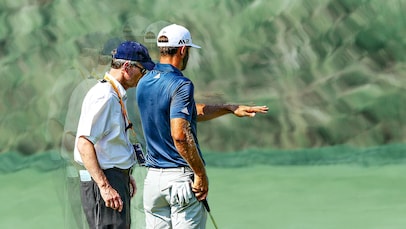


So, with all due respect to 54-hole leader Shane Lowry and surprise contender Andrew Landry, the golf world's attention was laser-focused on Johnson as he teed off that Sunday afternoon in the penultimate group at Oakmont. The venue itself, even after a rain-soaked week, was designed to expose every weakness in a player's game and psyche—narrow fairways, punishing rough, greens that run like gym floors. If Johnson was going to finally break through, he would have to prove his mettle on one of golf's most unforgiving stages.
The crucial sequence began at the par-5 fifth hole, where Johnson faced a six-foot par putt. As he settled over the ball, he backed away after a few practice strokes, something seeming amiss. He called for an official, explaining that his ball had moved slightly but insisting he had done nothing to cause the movement. The official examined the situation, found no evidence of wrongdoing, and waved Johnson on to complete his putt.
Six holes later, as Johnson nursed a two-shot lead over Lowry, USGA officials pulled him aside with news: They were reconsidering the fifth-hole incident and might assess a one-stroke penalty after the round. Johnson would have to complete the most important seven holes of his professional life uncertain of his actual score. When he bogeyed the 14th hole, neither he nor anyone else knew whether he held a one-shot lead or was tied for the lead with Lowry.
In that moment, every ghost from Johnson's past seemed to materialize. The consensus among players, commentators, and those watching at home was that Johnson had done nothing wrong, yet here was controversy finding him again. The script seemed preordained—perhaps some players are cursed to repeat the same tragic act, forever cast as the protagonist who falters in the final scene.
What happened next revealed the true character that had been obscured by years of close calls and controversy. The very equanimity that critics had identified as Johnson's weakness in clutch moments was there when he needed it most. While most players would have been consumed by the uncertainty, paralyzed by the injustice of the situation, Johnson simply played golf.

Dustin Johnson poses for photographers after winning the U.S. Open at Oakmont.
David Cannon
He received some assistance from Lowry, whose three consecutive bogeys beginning at the 14th saved the USGA from complete humiliation and gave Johnson crucial breathing room. But the defining moment came in Johnson's response, answering the challenge with the kind of clutch play that had eluded him for so long. He played the final seven holes in even par, a display of composure given what Oakmont asks and the circumstances. The climax came at the 18th hole, where Johnson delivered a birdie that rendered the potential penalty irrelevant.
This wasn't a victory built solely on Johnson's prodigious power or his underrated short game, though both were on full display. This was gumption, a demonstration of the very heart that skeptics had wondered if he possessed.
Now, when a player of Johnson’s caliber finally does the thing he couldn’t, there’s an idea, even expectation, that the great unburdening will lead to a tear. In a sense this happened: From Oakmont through the fall of 2020, he captured 15 victories, culminating in his second major championship at the pandemic-delayed Masters. He ascended to World No. 1, earned two Player of the Year honors, became a stalwart for Team USA in international competitions. For a glorious stretch, it appeared that conquering Oakmont had indeed freed Johnson to fulfill his vast potential.
Yet even in his golden period, the "what-ifs" continued to accumulate. After winning three consecutive events to start the 2017 season and arriving at Augusta National as the prohibitive Masters favorite, he suffered a freak accident—falling down a flight of stairs at his rental home—that forced him to withdraw on the day of the tournament. There were 54-hole leads at the 2018 U.S. Open and 2020 PGA Championship that slipped away, adding new chapters to his anthology of near-misses.
Johnson's legacy became further complicated in 2022 when he became the first marquee name to join LIV Golf. His defection conferred a sense of formidability when the league desperately needed it, allowing for other elite players like Brooks Koepka, Bryson DeChambeau, Cameron Smith, and Jon Rahm to follow. Unlike many of his peers, Johnson never resorted to hollow justifications about "growing the game" or filed lawsuits against the PGA Tour. His decision appeared motivated by financial considerations and lifestyle preferences rather than ideological differences. Nevertheless, his association with LIV has created a stigma that, in many circles, may never fully fade.

Dustin Johnson watches his tee shot during 2025 LIV Golf Miami.
Icon Sportswire
As golf returns to Oakmont for the 2025 U.S. Open, the current assessment of Johnson's career has grown increasingly melancholy. At 40, he appears to have lost the competitive fire that once burned so intensely. In his last 12 major championship appearances, he has managed just one top-30 finish and has missed the cut in five of his last seven starts. His world ranking has plummeted into the 850s.
Perhaps this is merely a temporary lull, and Johnson retains the ability to summon another memorable run. Perhaps we are all prisoners of the moment, too quick to write obituaries for careers that might yet produce more chapters. But there's also a very real possibility that we have witnessed the competitive conclusion of Johnson's journey—he turns 41 later this month—and if that proves true, his major championship total of two will may feel insufficient for a talent of his magnitude.
Yet dwelling on what might have been risks diminishing what actually was. The 2016 U.S. Open at Oakmont serves as a reminder that, for one afternoon on golf's most demanding stage, against its most unforgiving course, under the most trying circumstances imaginable, Dustin Johnson proved meaningful victories aren't the ones that come easily, but the ones that almost slip away, claimed by those who refuse to let them go.