British Open 2025: Our hole-by-hole tour of Royal Portrush reveals what makes this Northern Irish links so unique
American audiences can be both enamored and confused by the Open Championship courses of the United Kingdom. On one hand, the way golf is played is different and exciting. Balls roll for 100 yards. The bunkers are small and deep. Fescue and gorse can swallow shots whole, and the wind tends to bend flagpoles in half. There’s the sense that anything might happen at any moment.
On the other hand, the courses often look brown and dull. The holes on TV tend to resemble one another and resemble those on other courses, too. They are near the sea but rarely on the sea, and most lack the vibrant variations of an Augusta National, the jaw dropping scenery of a Pebble Beach or even the curious shapes and ominous water of a TPC Sawgrass.
Experiencing links courses is usually better than observing them.
That’s what makes Royal Portrush so different. When The Open revisited the course in 2019—for the first time since 1951—it was a fresh and energetic departure delivering an unexpected reappraisal of what links golf could look like.
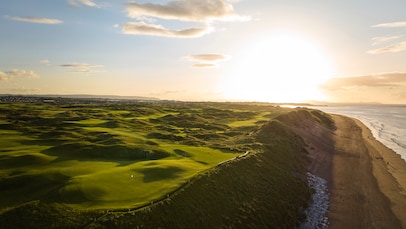
Credit Northern Ireland. Links golf here is not like links golf in Scotland and England. It’s lusher and denser, full of emerald and gold. The dunes are bigger and the grasses longer. The ball bounces as much up and down as forward, and the greens, at least at Portrush, bob and weave in a way that would make most British courses seasick.
It doesn’t hurt that Portrush sits atop high bluffs overlooking the Atlantic with outward views just as stirring as those inward. It all adds up to a welcome diversion from the usual march of Open courses. The other championship venues are inarguably great, but Royal Portrush is unique.

Mark Alexander

David Cannon/Getty Images
We invite you to watch the video below to learn more about each hole at Portrush and see the course in all its grandeur.