Hot List 2026: Lowest spinning drivers for low-handicap players

J.D. Cuban
The old expression was “speed kills,” but when it comes to your driver, it might be better to think of it as “spin kills.”
It doesn’t matter who you are, if you want more distance off the tee, you’re going to have to control the amount of backspin off your driver. And almost always that means less spin. Today’s drivers feature lower centers of gravity than those of just a decade ago, and thus shots from drivers across the board are lower-spin than they used to be. What we see in our Hot List testing is how many drivers are not just “low-spin” but are consistently launching with less spin.
In simplest terms, when shots launch with too much spin the ball flies with too much “up” and not enough “out.” It also means that those slices and hooks could be more damaging. In reality, though, the push for the lowest spin possible misses the point. What you really want is consistently lower spin.

J.D. Cuban
What we're talking about here is the level of spin a driver is producing on shots all across the face, not just the lowest spinning shots. Impacts lower on the face will spin the most, while shots that happen higher on the face will fly with reduced spin. This is largely the result of the relationship between the impact location and the head’s center of gravity, although there are other factors that can contribute to make spin more consistent. But you’re not going to get consistent distance if a shot slightly lower on the face launches with dramatically more spin than a shot slightly higher on the face. Callaway’s Evan Gibbs, director of research and development for woods, explains what the right spin for a driver really means.
“Our goal is to lower spin the most on the low face impacts, maintain or increase spin a touch on the high impact locations, which should increase your probability, or your likelihood, to hit shots in that optimum spin window,” he said.
Generally speaking, that optimum spin window is probably 2,300 to 2,700 rpm, but it can be a little higher for slower swing speeds and perhaps a little lower for the highest swing speeds. But remember, we’re not talking about a straight-line quest for the lowest spin number. You may get a center impact that is very low spin but that means a higher-face impact will end up not having enough spin for the ball to stay in the air.
It’s also true that lower spin should be more of a focus for higher speed players, while launch is more important to players with swing speeds in the mid-90s (mph) and below. Indeed, in a typical simulation a high-speed player will gain more total distance by reducing spin by 20 percent than he will by increasing launch by 20 percent. The opposite is true for swing speeds under 95 mph. That’s why our group of low-handicap players, most of whom swing the driver at more than 100 mph, makes for a good test group to find the drivers with the consistently lowest spin.

J.D. Cuban
Using the launch numbers from the Rapsodo MLM2 Pro launch monitors, which tracked more than 20,000 shots, we sorted the field of drivers based on the lowest normalized spin. In other words, we found the group of drivers that tended to launch with less spin than the average spin of the group of drivers each of our players hit. These drivers didn’t necessarily record the lowest RPMs, but they consistently produce less spin for each player relative to that player’s average spin for all drivers. That stat is important because our players are not robots. They hit the ball across a large face area so consistently low spin reflects how little difference in spin might exist for a wide range of the impact area.
A couple of things to think about as we look at drivers that universally decrease spin:
- Check your loft. Generally speaking, just like a 9-iron spins more than an 8-iron, more loft on your driver will increase spin. But if you’re looking at a lower-spinning driver, you may have the option to use the adjustable wrench to increase loft slightly. This will provide an easier launch without the penalty of excessive spin. Higher launch combined with lower spin optimizes total distance.
- As we’ve been saying, you’re after consistently low spin on your driver. So don’t completely ignore those reasonable mis-hits, the kind of shots that are probably going to crop up a few times a round. Make sure your fitter is tracking that range of low to high spin on those mis-hits to make sure mis-hits aren’t leading to strange anomalies in flight and total distance.
- Depending on your clubhead speed, because the CG is closer to the face, low spin drivers may feel more rigid and play less forgiving than standard models, particularly for average to moderate swing speed players. Conversely, a deeper CG creates the potential for more dynamic loft at impact and more stability, which for many moderate swing speed players will feel softer and easier to hit. Of course, a low-handicap player with sufficient speed might find those higher-flying drivers less easy to control and less solid-feeling at impact.
- One note on our collection of drivers here: There are some low-spin models not on this list that didn’t qualify because not enough of our low-handicap players were fit into those models to produce enough hits for a meaningful sample. Some of those models that also could be worthy of your personal research on low-spin drivers: Ping G440 LST, TaylorMade Qi4D LS, Titleist GT4.
Here’s a look at the lowest spinning drivers for our low-handicap players:
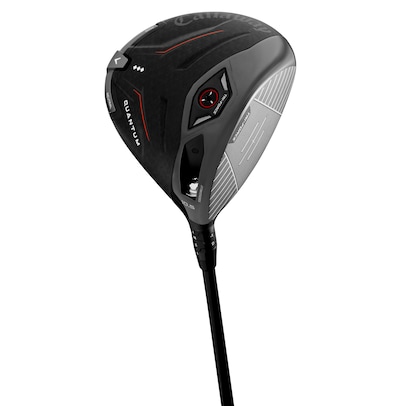
"The overall look of this thing just screams tech. Everything looks like you could get this thing dialed in to maximize the most you could. The next thing is the ability to hit bad shots and never lose control of spin. The spin was always good. So if you're playing into the wind or down to the wind, you gonna get good shots."—Jason Guss, 0-handicap; driver distance: 260 yards

“Has a good bit of pop to it. A high swing speed is not getting the added spin out of this club that I see with others. So still getting the rollout, still getting all of the the added benefits you want performance-wise.”—Robert Shaw, plus-2 handicap; driver distance: 305 yards

"I love the look at address. To me, it sets up like you can see the loft, and that makes you not want to help it up. Ultimately, that allows me to swing aggressively.”—BK Suhr, 2-handicap; driver distance: 300 yards

“This driver consistently produced the highest ball speeds, while mis-hits and hits off the center of the face were very consistent throughout. For someone who likes to work the ball and hit different windows with the driver, I think this is as good as it gets as far as blending forgiveness with that capability.”—Wesley Gilmore, plus-3 handicap; driver distance: 290 yards
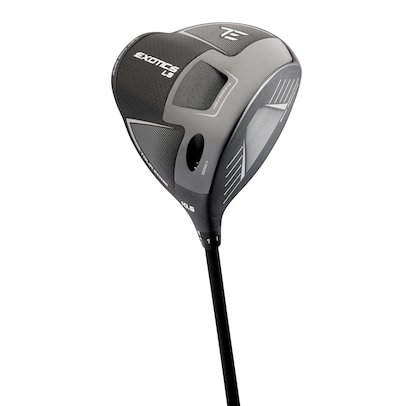
“Really love the carbon fiber finish to the head. Found it had quite a lot of get up and giddy up too. Also, off-center hits were very forgiving.”—Jack Bingham, 1-handicap; driver distance: 280 yards
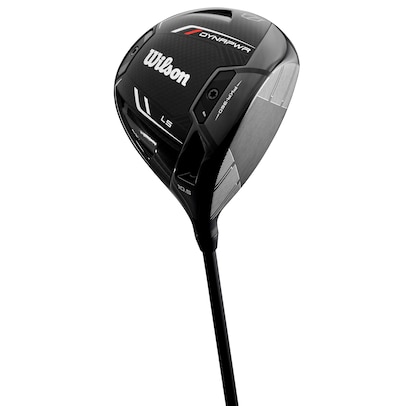
“It has an awesome little ‘ting’ sound to it when you hit the sweet spot. Heel balls, toe balls, were all still carrying my target distance, so it has that forgiveness factor. I'd say it outperforms people's expectations.”—Alan Cooke, 3-handicap; driver distance: 270 yards