Advertisement


A closer look at the 15 newcomers on our latest course rankings

May 07, 2023
Save for later

One of the joys of compiling and publishing the Golf Digest America’s 100 Greatest and Second 100 Greatest Courses is seeing the debut of previously unranked courses. Sometimes they’re the hot new thing freshly bursting onto the scene, dazzling with irresistible charisma. This occurred with regularity during the golf boom of the 1990s and early 2000s. Other times—and perhaps more satisfyingly—they’re older courses that have been polished through renovation, or whose charms are just now being fully appreciated.

What causes some degree of sadness is knowing that as new courses come into the rankings, others fall off. Some of those departed courses might be shooting stars that flash quickly and then disappear, but more are like old friends we’ve known for years, if not decades, yet we must bid them farewell.

It's part of the life cycle of any course ranking endeavor: courses appear, slide up and down, and in all but a few cases, fade away. Just 16 courses in the U.S. have appeared in every iteration of Golf Digest’s rankings since 1966. Call these our “First Growths,” a term that originated in Bordeaux, France, to designate a 19th century assessment of the region’s top wine growing estates. Golf Digest’s First Growths are Augusta National, Baltusrol’s Lower Course, Congressional’s Blue Course, Cypress Point, Inverness, Los Angeles Country Club’s North Course, Medinah’s No. 3 Course, Merion, Peachtree, Pine Valley, Pinehurst No. 2, Riviera, Scioto, Seminole, Southern Hills and Winged Foot West.

For every other course in the land there are debuts and, later, in one form or another, exits.

/content/dam/images/golfdigest/fullset/course-photos-for-places-to-play/sankaty-head-massachusetts-4854.jpg

Jeffrey Bertch

Here are the newcomers to America’s 100 Greatest and Second 100 Greatest Course, as well as the, for now, dearly departed.

34. OHOOPEE MATCH CLUB
Ohoopee Match Club
false Private
Ohoopee Match Club
Cobbtown, GA
4.8
16 Panelists

From Golf Digest Architecture Editor emeritus Ron Whitten:

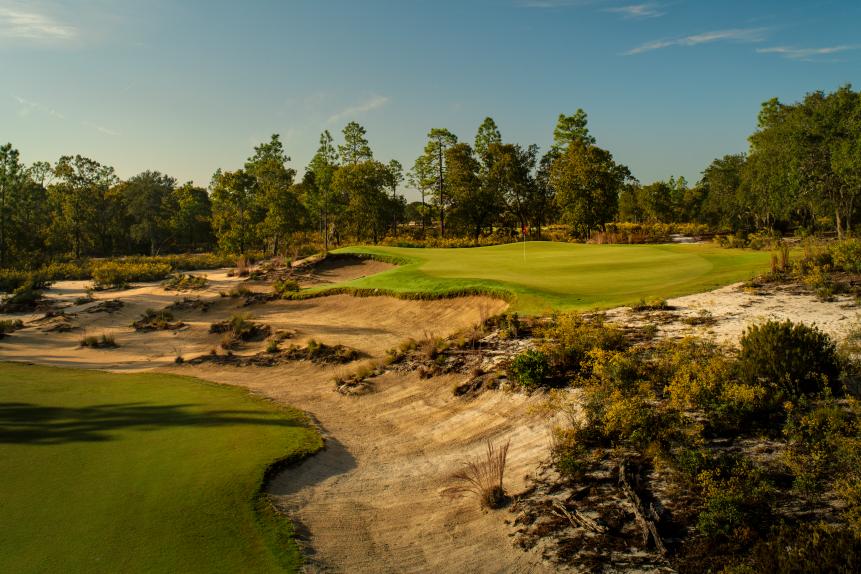
I’ve been told Gil Hanse had first examined the site of Ohoopee Match Club as far back as 2006 considered it ideal for golf: gently rolling terrain with no severe elevation changes, and beautiful sandy soil deposited by the nearby Ohoopee River, perfect for drainage and firm, fast conditions.

The ground around tiny Cobbtown, Ga., is also perfect for growing onions—it’s just northeast of Vidalia, world-famous for the Vidalia onion. Indeed, Ohoopee’s logo is a freshly picked onion, although if you look closely, its roots are three writhing snakes.

Any symbolism pertaining to match play is uncertain; perhaps it simply suggests the sort of putts one will face. What’s the composition of a course meant for match play? One might think it would contain lots of penal hazards, because a triple bogey on any particular hole would not be fatal in match play.

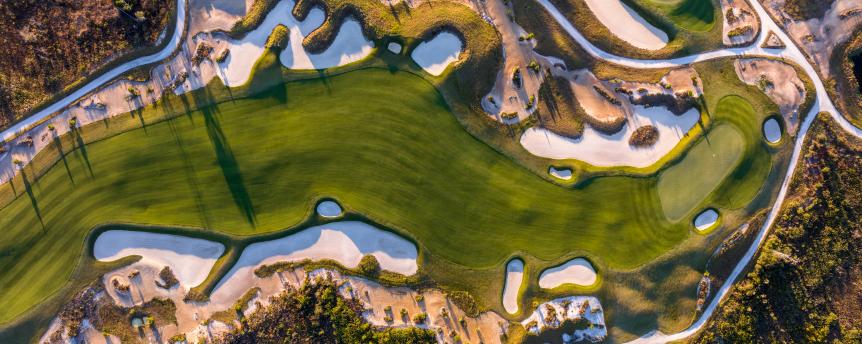
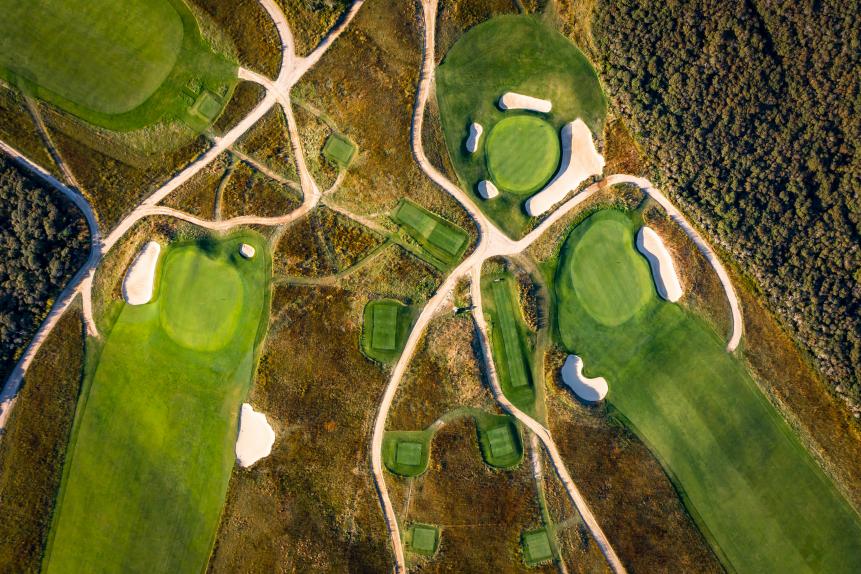
Perhaps the targets would be smaller than normal, to level the playing field between big hitters and short-but-accurate golfers. That’s not the composition of the 7,325-yard championship course at Ohoopee. Hanse did produce dramatic visuals in this sandy locale that hark back to portions of Pinehurst and Pine Valley, from long expanses of sandy rough dotted with native plants to deep, foreboding pits of sand, but they’re mostly on the far perimeter of holes. 

Explore our complete review here—including bonus photography and ratings from our expert panelists.


View Course

49. NANEA

Nanea Golf Club
false Private
Nanea Golf Club
Kailua Kona, HI
4.7
15 Panelists
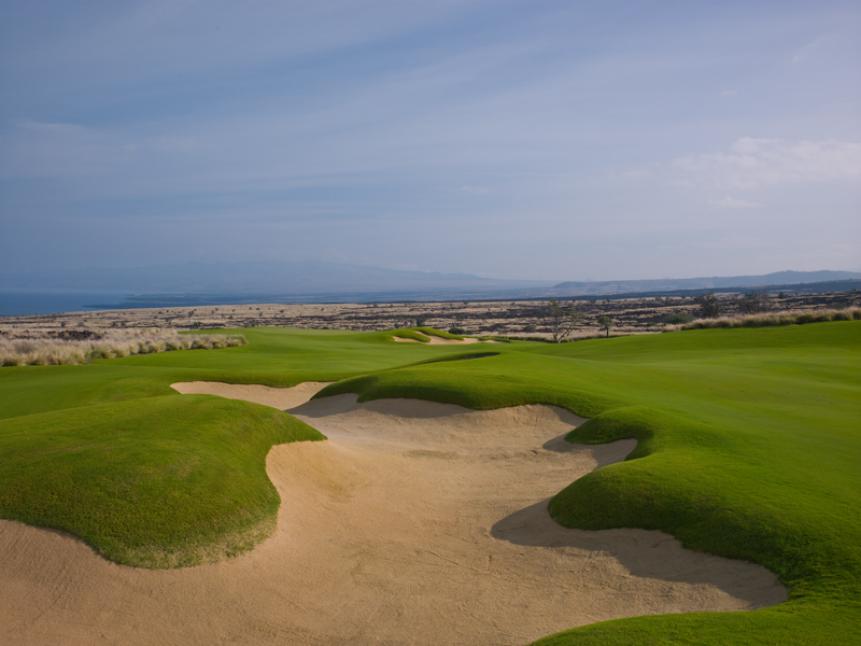
In the early 1960s, Robert Trent Jones built the first course on Hawaii’s Big Island for a very wealthy owner (Laurance Rockefeller), grinding up the site’s volcanic rock to use as “sand” on which to grow grass. Forty years later and just 22 miles away, architect David McLay Kidd also built a course on volcanic rock for very wealthy owners (Charles Schwab and George Roberts), but rather than transform the lava topography, he routed his holes among the black outcroppings and through the site’s meadows of native grasses. Located on a high, exposed plateau beneath Mt. Hualalai, the holes ramble and roll into topsy-turvy greens, each with a sterling view of the Pacific Ocean three and a half miles in the distance.
View Course

115. SHEEP RANCH

Sheep Ranch
false Public
Sheep Ranch
Bandon, OR
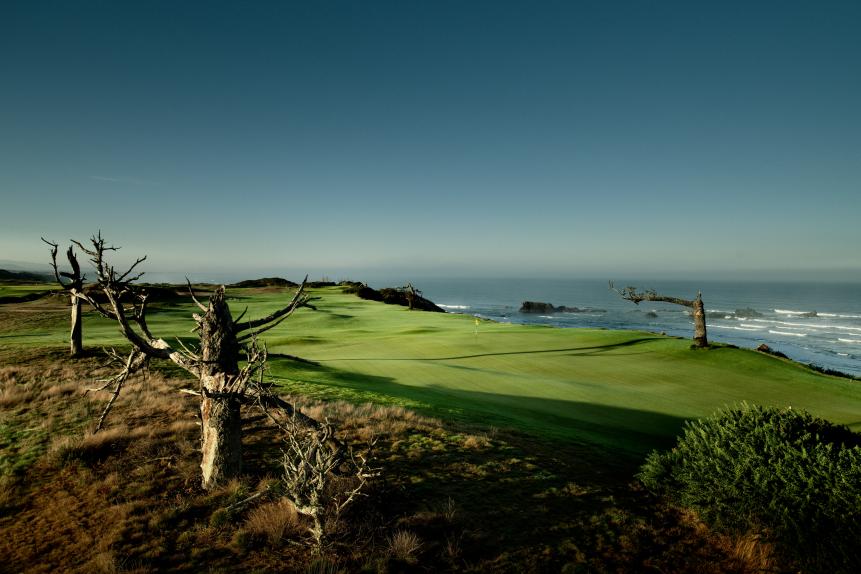
Sheep Ranch began life as a different Sheep Ranch in the early 2000s, a rag-tag, cross-country, 13-hole course with no irrigation built by Tom Doak on a bluff just north of what would later become Old Macdonald. It was a little-used recreation that only insiders knew about. Mike Keiser tapped Bill Coore and Ben Crenshaw to convert it into Bandon Dunes’ fifth regulation 18-hole course and Coore and Crenshaw’s second. Spread across an open, windswept plateau, using many of the same greensites, Coore managed to triangulate the holes in such a way that nine now touch the cliff edge along the Pacific Ocean. Extremely wide fairways, large putting surfaces and sandless bunkers allow the exposed course to be playable in extreme winds. Though it's slipped behind its Bandon brethren in the rankings, Sheep Ranch nevertheless accomplishes the most difficult of feats for resort courses—distinction among equals.
View Course

131. CLEAR CREEK TAHOE

Clear Creek Tahoe
false Private
Clear Creek Tahoe
Carson City, NV
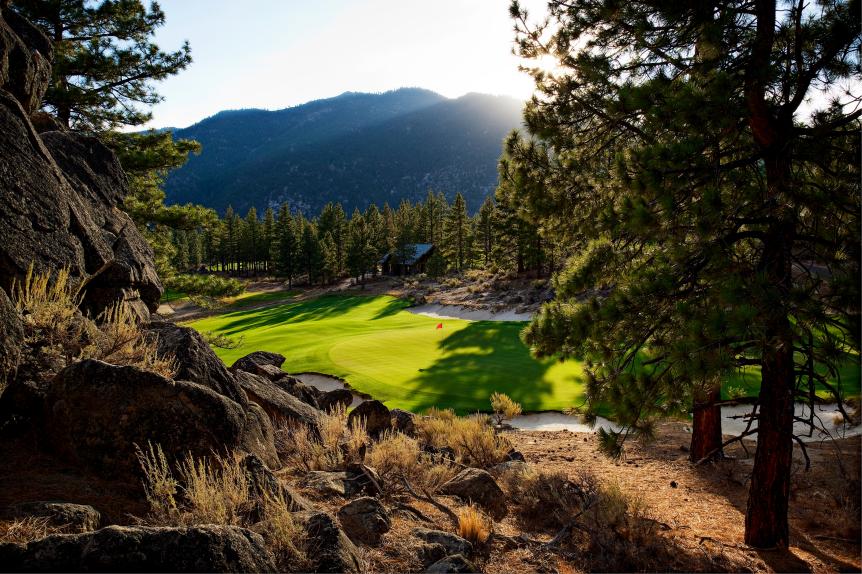
One gets the feeling Bill Coore and Ben Crenshaw looked long and hard at this mountain property on the east side of Lake Tahoe before agreeing to take the job. On one hand, the site is gorgeous, an elevated evergreen forest with views of the surrounding Sierra Nevadas and distant valleys. On the other, it was far more rugged than they preferred and would prove challenging to link up 18 well-connected holes on such vast terrain. Ultimately, beauty won out and they were able to find enough calm ground—especially from holes 10 through 15—to make the journey around it seem meditative and not a lurching, adrenaline-filled rush. The boulder-strewn site recalls parts of Rock Creek Cattle Company in western Montana, currently 65th on America's 100 Greatest Courses, and the off-site views and the way fairways and greens blend into the native grasses and conifers bring to mind Gozzer Ranch, ranked No. 43. Pretty good company.
View Course

140. MANELE

Manele Golf Course
false Public
Manele Golf Course
Lanai, HI
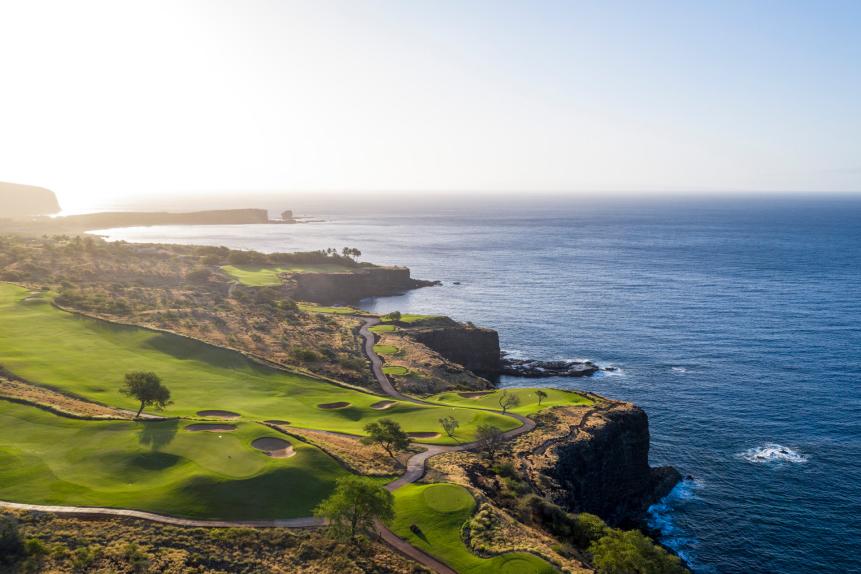
Manele, previously called The Challenge at Manele, unseated Kapalua’s Plantation course as the highest-ranked public course in Hawaii several years ago. Now the course, located on the southern coast of Lanai, has the votes to make it eligible for the 100 Greatest and Second 100 Greatest rankings as well, buoyed by an Aesthetics score that regularly ranks among the top 30 in the U.S. The Nicklaus design is worthy of high praise. It has three ocean-cove holes, including the par-3 12th and dogleg-right par-4 17th. You might argue Manele has been perpetually underranked, starting with its finish on Golf Digest’s ranking of Best New Resort Courses in 1994, well behind World Woods’ Pine Barrens course (now known as the Karoo at Cabot Citrus Farms), which is currently 50th on our 100 Greatest Public. It’s hard to argue it’s underranked now.
View Course

142. THE DYE COURSE AT WHITE OAK

The Dye Course at White Oak
false Private
The Dye Course at White Oak
Yulee, FL

The Dye Course at White Oak, our 2022 Best New Private Course winner, is one of the most exclusive golf courses to be built in recent memory. It’s located on the border of Florida and Georgia outside Jacksonville, in almost complete natural isolation. It has no members, no on-site clubhouse (or any other structures on or near the course), and hardly anyone has played it except for personal invitees of owner Mark Walter and several dozen Golf Digest panelists, who visited between October 2021 and September 2022. Walter engaged the late Pete Dye to design the course in 2013, but by the time construction began in 2017, Dye’s health had deteriorated, and he was no longer able to be active in building it. The job of finishing White Oak fell to longtime confidant and veteran course builder Allan MacCurrach, who interpreted Dye’s wishes based on extensive discussions from previous years and his own wealth of experience working with Dye on over 20 projects. Intensely private and almost entirely off the radar until now, this exclusive video tour captured by photographer Brian Oar offers the first public looks at The Dye Course at White Oak
 

Read our full review, including panelist comments, here.

View Course

144. BLESSINGS

Blessings Golf Club
false Private
Blessings Golf Club
Fayetteville, AR
George Thomas conceived of the idea of a “course within a course” when designing Los Angeles Country Club in the early 1920s, creating various tees for different holes that changed the angles of play and even the par values on different days. That’s part of the concept of Blessings in northwest Arkansas, where Robert Trent Jones II built a multifaceted routing that can be played in a variety of lengths and combinations intended to challenge the game’s best collegiate players (Blessings regularly hosts NCAA tournaments and was the site of the 2019 National Championships), including one setup with a USGA course rating of 80.9 and a 155 slope. Several holes cross over each other in the manner of old links courses, though there’s nothing linksy about the rural, wooded and sloping property bisected by Clear Creek. When you build a course for an individual owner—in this case, John Tyson of Tyson Foods—you get to break the rules. In 2018, architect Kyle Phillips remodeled Blessings to make it more walkable, creating a new first hole and relocating several greens while shifting and rebuilding bunkers to increase strategic diversity.
View Course

153. SAGE VALLEY

Sage Valley Golf Club
false Private
Sage Valley Golf Club
Graniteville, SC
4.3
8 Panelists
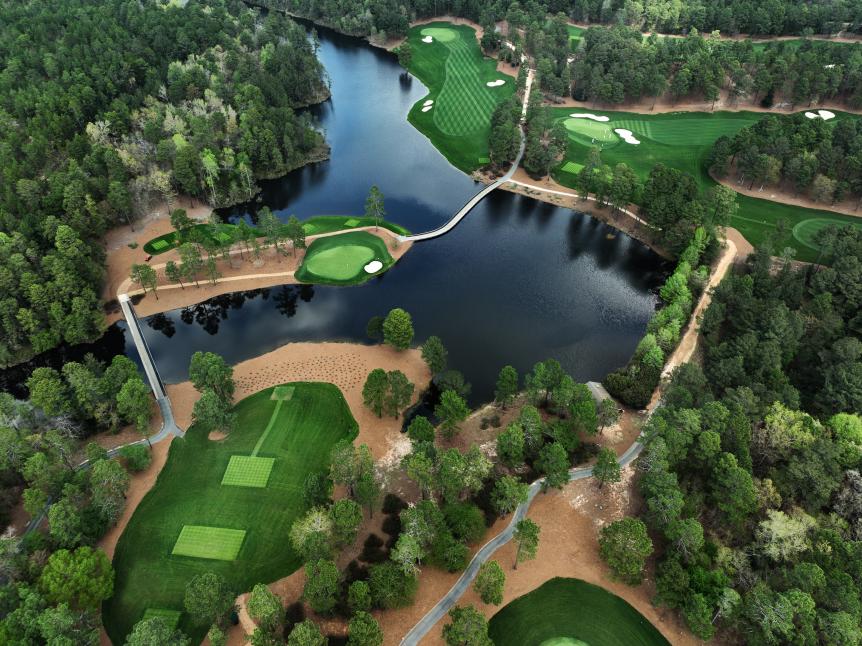
Built just down I-20 from Augusta National, there's no mistaking Sage Valley's resemblance to its neighbor. The pine straw, the perfect conditioning and symmetric mowing patterns, the perfect bunker sand—it's all an ode to Augusta, where Tom Fazio, the architect at Sage Valley, served as the consulting architect for many years. Sage Valley has plenty of room off the tee, similar to its counterpart, but less drastic green complexes, characteristic of Fazio's approach—giving higher-handicappers a chance to run balls up on the ground in some spots—actually similar to how Augusta was originally designed by Dr. Mackenzie. Sage Valley fell off our Second 100 Greatest rankings in 2019 due to a lack of ballots—but it briefly returned in 2023-'24.
View Course

164. OLD ELM

Old Elm Club
false Private
Old Elm Club
Highland Park, IL
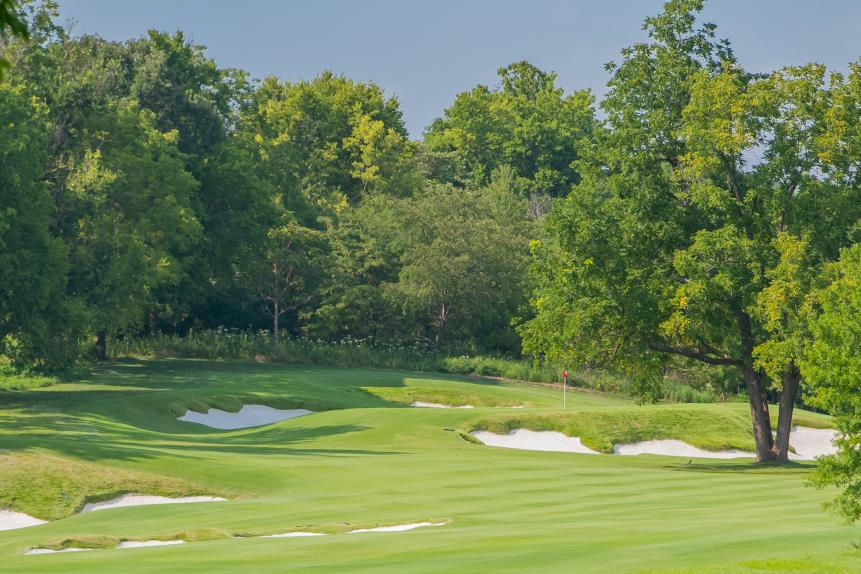
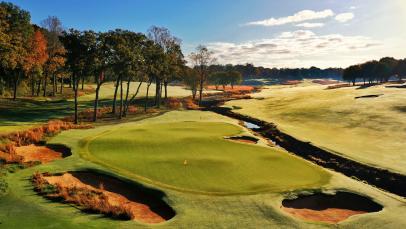
Old Elm, a male-only club on Chicago’s north side, has one of the country’s most unique design pedigrees. British architect Harry S. Colt laid out the course in 1913 on one of his few visits to the U.S., collaborating on-site with Donald Ross, who to that point had designed courses in the Northeast and at Pinehurst but was not nationally known. After Colt departed, Ross, consulting Colt’s drawings and design notes, oversaw the construction of the holes. Over the last decade, architect Drew Rogers has helped reclaim the property’s original spaciousness by removing hundreds of trees that had begun to clog the holes and expand fairways and greens. With the help of designer Dave Zinkand, they recreated the rough and rugged bunker edging that Colt was known for in his best U.K. designs. Their work has reestablished Old Elm as one of the top courses in the golf-rich Chicago area.
View Course

170. HOLLYWOOD

Hollywood Golf Club
false Private
Hollywood Golf Club
Deal, NJ
Walter Travis was a man of many talents. As a player, he won three U.S. Amateur titles and one British Amateur, and his 80-percent match win percentage ranks among the sport’s all-time best. He was a writer, editor and publisher of The American Golfer in addition to designing over two dozen golf courses. His greatest skill might have been bunkering courses. His work revamping Garden City in the early 1900s—adding, moving and deepening the bunkers as well as rebuilding the greens—transformed that course into what it is today, but his most ambitious work is at Hollywood. The elaborate bunker shapes and arrangements are nothing short of dazzling, especially as they’ve been sharpened and polished by Brian Schneider of Renaissance Golf, along with co-designer Blake Conant. They lay out like arrangements of gemstones and the spots on a jungle cat, varying from the size of a mansion parlor to little more than a bread box. Anything like it attempted today would be considered garish, but Travis’ Beaux Arts bunkering at Hollywood is a study in artistry.
View Course

175. ATLANTIC

Atlantic Golf Club
false Private
Atlantic Golf Club
Water Mill, NY
Real-estate developer Lowell Schulman hired Rees Jones to create his dream golf club on rolling linksland in Bridgehampton, one of the richest zip codes in the country, a few decades after founding Brae Burn Country Club in Westchester County. Jones created a strategic marvel with mounds, moguls and fescue framing the holes that test golfers—along with the seemingly ever-present wind. Jones' creation debuted on Golf Digest's America's 100 Greatest ranking in 1997 at 65th and was ranked on four editions until falling off in 2006. It reappeared on our Second 100 Greatest in 2023-'24, for the first time since 2016, and has held strong to its spot No. 175.
View Course

176. RESERVE AT MOONLIGHT BASIN

The Reserve At Moonlight Basin
false Private
The Reserve At Moonlight Basin
Big Sky, MT
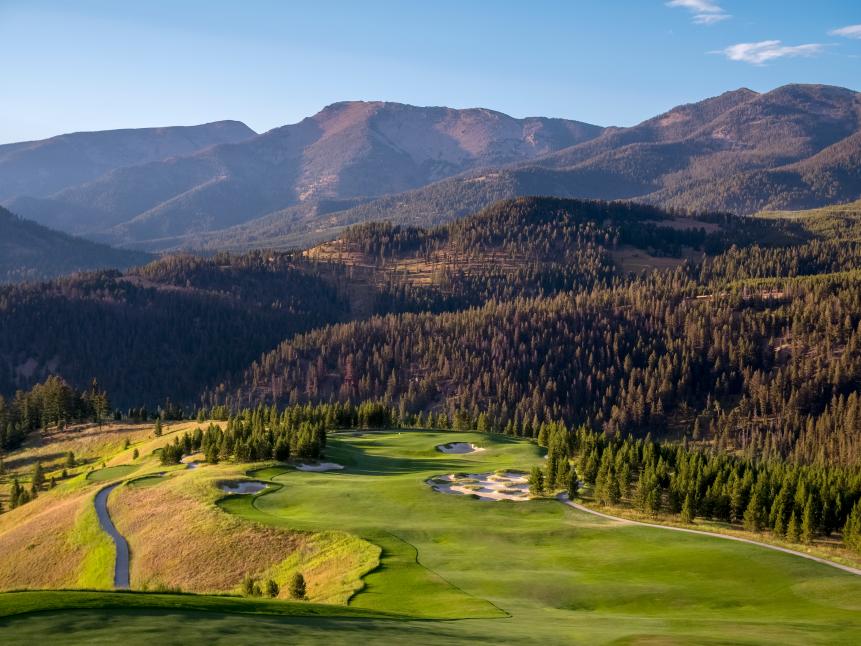
The Reserve at Moonlight Basin was just the third course from Montana to appear in the national rankings when it debuted in 2023, joining Tom Doak’s Rock Creek Cattle Company and Robert Trent Jones’ Yellowstone Country Club, which surfaced in the 1960s on the list of America’s “Toughest” courses (a fourth joins this year, Tom Fazio's Stock Farm at 185th). Located near Big Sky at an elevation of 7,500 feet above sea level, the Jack Nicklaus design is the highest (in altitude) in the rankings. Big Sky is apt—the course was built on the site of an old ski mountain with 360-degree panoramas of the surrounding Rockies, and the impressively large holes race, slalom and dive across circuits of terrain that twist in different directions through the wilderness. With numerous downhill shots through the thin air, the championship yardage of 8,000 yards doesn’t seem egregious, and scoring well actually requires a high degree of control in judging where the ball will carry and settle. The epic vistas of holes like the par-4 first and par-5 17th (at over 700 yards) are sights to behold, for golfers and non-golfers alike.
View Course

180. THE BEAR'S CLUB

180. (NEW) The Bear's Club
false Private
180. (NEW) The Bear's Club
Jupiter, FL
4.3
6 Panelists


From Golf Digest Architecture Editor emeritus Ron Whitten:


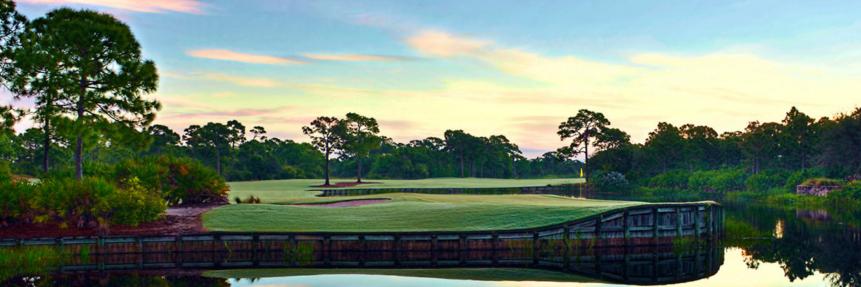
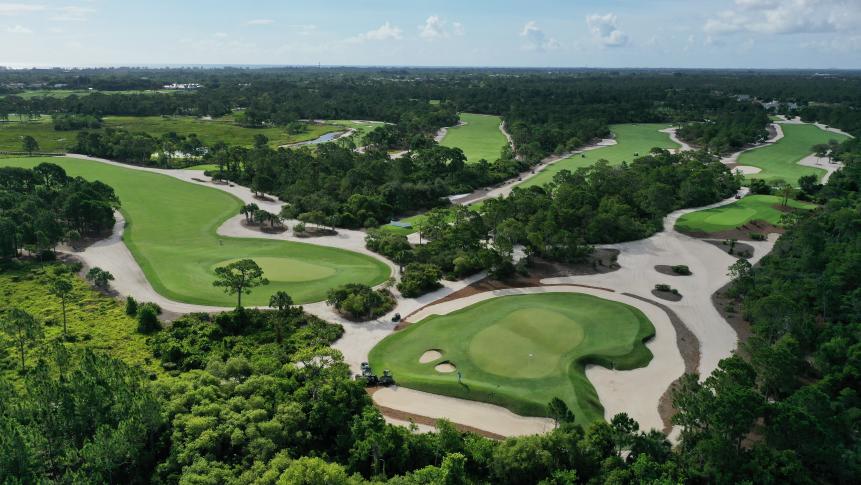
The Bear’s Club marked a transition point in Jack Nicklaus’ design outlook when it opened in 1999. His architecture had typically been analytical and, while still lovely, oriented toward factoring how players might break down the features tactically. That strategic backbone is present in The Bear’s Club, but the team approached the design more holistically than they had previously, factoring in aesthetics to an unprecedented degree. Instead of building holes on a golf site, Jack and his associates created a golf environment, expanding and enhancing a dune ridge running through the low pine and palmetto scrub and anchoring large, sensuous bunkers into the native vegetation.
 

The course is part of an upscale residential development near the Intracoastal Waterway, but it blends so well you wouldn’t know it. The change in perspective that Nicklaus Design developed at The Bear’s Club pushed the firm toward similar successes in the 2000s like Sebonack (with Tom Doak), The Concession and Mayacama.
 

Explore more about Bear's Club with our complete review here—including bonus photography and ratings from our expert panelists.

View Course

181. MEDALIST

Medalist Golf Club
false Private
Medalist Golf Club
Hobe Sound, FL
Medalist is a long, demanding course that can stretch out to roughly 7,600 yards, a necessary requirement when the membership includes Tiger Woods, Dustin Johnson, Rory McIlroy, Brooks Koepka and many more of the world’s top professional players. They like Medalist for the relaxed atmosphere and local convenience, but also because it’s a demanding driving course—the holes circle through an undeveloped sanctuary of wetlands and low scrub vegetation one parcel south of McArthur (No. 157) and are buffeted by the strong Atlantic crosswinds. Pete Dye designed Medalist with co-founder Greg Norman (this was one of Norman’s first U.S. designs), and the course features Dye’s S-shaped holes curling around sand buffers, slinky ground contours and small, low-profile greens that bleed into short-grass surrounds. The course had undergone numerous modifications and formalizations in the late 1990s and early 2000s, some by Norman, but Bobby Weed reclaimed much of the original Dye character during a 2015 renovation.
View Course

186. KARSTEN CREEK

Karsten Golf Club
false Private
Karsten Golf Club
Stillwater, OK
4.1
8 Panelists
A former winner of Golf Digest's Best New Public Course title in 1994, Karsten Creek was developed by Oklahoma State University and thus often appears toward the top of rankings of the best collegiate courses in America, and for years was a fixture on America’s 100 Greatest Public Courses. The Tom Fazio design even broke into America’s Second 100 Greatest ranking in 2023-2024 at No. 186. In 2023, the university made the course membership-only and closed it for major renovation by Andrew Green. It might be more accurate to say that Green built an entirely new golf course on top of the old property, utilizing the footprint of about half the previous hole corridors and branching out into new direction through the surrounding hardwoods for the others. The only resemblance to the former course are the six finishing holes including 17 and 18 that run in opposite directions along the shoreline of a lake and the extreme shot demands that will continue to sharpen the skills of the collegiate athletes who practice here.
View Course

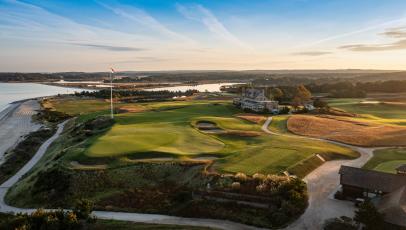
196. SANKATY HEAD

Sankaty Head Golf Club
false Private
Sankaty Head Golf Club
Siasconset, MA
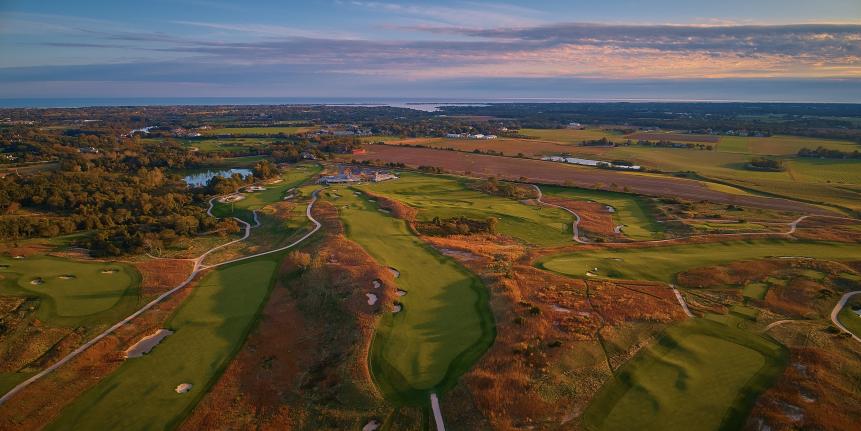
Some of America’s greatest golf courses were designed by first-time novices and non-architects: Merion, Oakmont, Pine Valley and Pebble Beach all fall into this category. Sankaty Head on the eastern edge of Nantucket Island does, too. It was built by a local amateur player named Emerson Armstrong, but judging by the circuitous routing and attractive bunkering (honed in recent years by Jim Urbina) that recalls some of Donald Ross’ best work, you’d be excused for assuming Armstrong had done this dozens of times. The roomy holes unfurl across open fields of fescue, riding the site’s swales and ridges like an English links. True to the inspiration, the greens are open in front to receive running shots played under the exacting Atlantic winds, and the collection of par-3s is about as tough and beautiful as it gets.
View Course

197. THE HARVESTER CLUB

The Harvester Club
false Private
The Harvester Club
Rhodes, IA
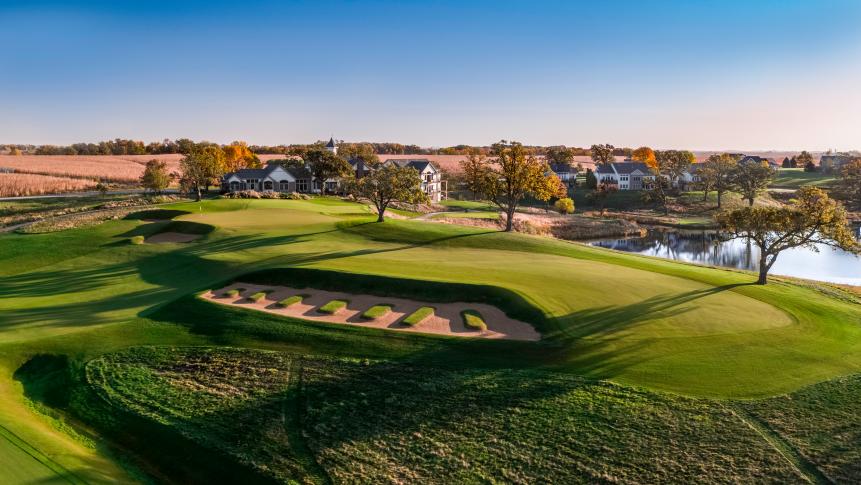
Though barely two decades old, The Harvester Club has led an adventurous life. It came into the world at the end of the 1990s as a course of its time: that is, an upscale daily-fee design 30 minutes northeast of Des Moines with snaking fairways and curvacious, modern-looking bunkering. A renovation in 2010 began to alter their character, roughing up the edges and giving the course a more rustic look. In 2017, the owners reversed course and took the club private, hiring original architect Keith Foster to remove trees to better highlight the site’s hills and prairie terrain and to revamp the holes with new tees and wider, less snaking fairways. Foster also reimagined the course as a paean to early 20th-century architecture, constructing more squared-off greens, shifting new flat-bottomed grass-faced bunkers to more interesting and impactful locations, and adding thematic riffs on a Road Hole green, a Tillinghast-inspired Hell’s Half Acre, a Short Hole and an Oakmont-like Church Pews bunker.
View Course

• • •

Explore Golf Digest's recently relaunched Places to Play community, where you can add star ratings and reviews for all the courses you play. We've collected tens of thousands of reviews from our course-ranking panelists to deliver a premium experience, which includes experts' opinions, bonus course photography and videos, plus much more. Check it out here!