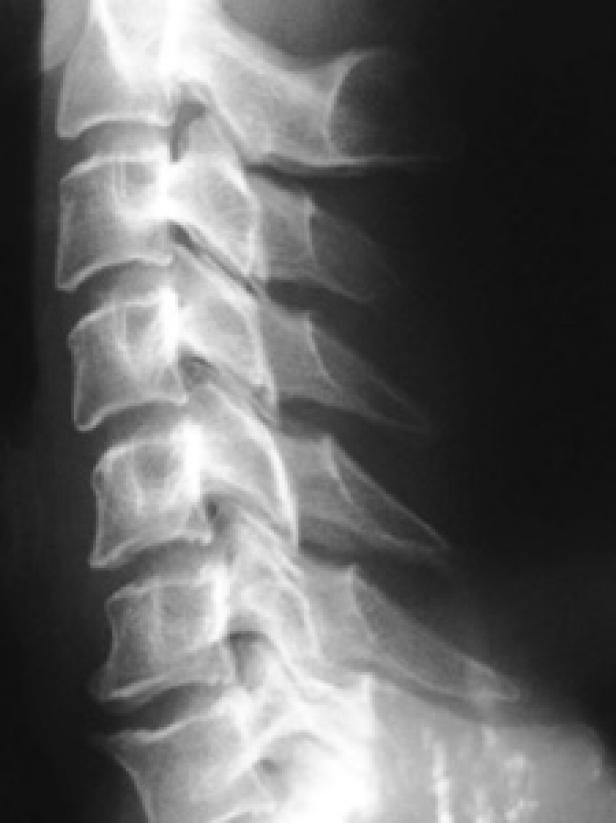
MY INJURY: I had a badly herniated disc between the C5 and C6 vertebrae and a bulging thoracic disc between the T6 and 7 vertebrae. There was no specific trauma that caused the injury. Most likely, it was the result of a quarter-century of practicing and playing golf. Just imagine how many balls I must have hit over those years. My workout program, which I began in 2000, left me very strong but there is really no prevention for simple wear and tear.MY SYMPTOMS: My trainer, doctor, coach and caddie all think I grind so intensely and compete with such focus that I was able to block out the painful symptoms for longer than most people would have. I would go to the fitness trailer on tour occasionally for a crick in my neck -- going back almost a year before the injury was diagnosed -- but I always just thought of it as one of those nagging things all professional golfers experience. The first concrete symptom I had was numbness in my right arm, which I commented on a couple of times to my caddie. Then, because I was losing feel in my right arm, I started having trouble with distance control with my irons. As I became more frustrated with the distance control issue I also began to notice some pain. That's when I went to a doctor and the diagnosis was made.__HOW I FOUND MY DOCTOR:__I was playing at the 2007 Ginn Open near Orlando, where I live, and went to the fitness trailer as I could not take the pain any longer. John Adams in the fitness trailer referred me to Dr. Bruce Thomas in Melbourne, FL. After my MRI, Thomas diagnosed the problem and told me I would be out of action for months. He then sent me to Dr. Barth Green, a world-renowned spine specialist in Miami. He confirmed the diagnosis and we discussed various treatment options, including surgery.MY REHAB: We decided to try a neck brace, anti-inflammatory medication, and pain medication and after the neck was stabilized. Dr. Thomas designed a rehab program that was both painful and exhausting but ultimately successful. It included ultrasound, stretching, and band work four times a week for six weeks.WHAT HAPPENED: When I returned to competition six weeks later I was not as strong, in part because the injury had done nerve damage and in part because I had not been able to work-out. I used to be able to do 15 pull-ups and now I couldn't do one. I was also not able to go at the ball as hard as I used to. As a result, I was shorter off the tee. So I began carrying a 5-wood (I used to carry a strong 4-wood and 7-wood) and would take some off shots with it so I wouldn't have to hit more stressful shots with long irons. It was like going back to the game I played in the mid-1990s before I got strong.
2.) Torn Rotator Cuff
__MY INJURY:__Not that it's anything to brag about, but I don't imagine there's a pro athlete out there who has gone through more with shoulder injuries than I have. In 1982, I tore the labrum in my left shoulder but didn't know it until 1985, when I had surgery to correct it. In 1986 I tore my rotator cuff, a series of muscles and tendons that help stabilize the shoulder. I had surgery for that, and it was difficult. After a third surgery in 1987 (my labrum again), my career on the PGA Tour was pretty much finished. Having won the 1976 U.S. Open, the 1982 Players Championship and six other tournaments, I was devastated.MY SYMPTOMS: I've had three more surgeries since joining the Champions Tour in 2003, the most recent in 2008. So, for a layman I have a fairly thorough knowledge of shoulder problems. The shoulder is a very complicated area of the body and the problem can be difficult to diagnose off-hand. But if you feel pain, weakness and a feeling of instability, or any one of the three, you need to get help. It could very well be a rotator cuff issue. They're pretty common in golfers.HOW TO FIND A DOCTOR: Contact the best local sports team in your area, and talk to their trainer. He will know who the best orthopedic doctors are. When you see the doctor, make sure you undergo a very thorough physical therapy program before going along with any decision to operate, because you may be able to generate enough strength in the surrounding muscle to take pressure off the affected area. If your shoulder doesn't respond, then, of course, you've got to go for the operation.REHAB: The rehab is crucial. The nature of the rehab depends on the site of the surgery and the extent of it, so I can't spell it out for you. But I won't mince words here: It's murder. Recovery is painful and slow, and can take up to six months before you start to return to normal. Rehab is a process, not an event. But the rehab is probably more important than the quality of the surgery, because lousy rehab won't get the most out of a well-done repair, but great rehab can help you obtain a great outcome from a repair in which the surgeon got so-so results.
3.) HIP
MY INJURY: My left hip had been bothering me for a few years, but the pain got a lot worse last year. I had trouble sleeping. Getting my left sock on was an Olympic event. My range of motion was limited, especially my follow-through. I felt compromised in several events, particularly the Senior Open on a severe walking course.MY INJURY AND SYMPTOMS: I studied a variety of surgeons and techniques. I wanted to know about things like the infection rate, complications rate and how well the anatomy was put back together. I decided on a total replacement using what's called an Anterior Approach because there is less compromise in the overall procedure and recovery is generally faster.HOW I FOUND MY SURGEON: Jim Vernon, the president of the U.S. Golf Association, was my roommate at Stanford. Early on, he sent me Dr. Joel Matta's website. Jim plays golf with Dr. Matta in Los Angeles. After doing due diligence, I wound up picking him. He popularized the Anterior Approach, and has done more than 1,700 of them. He believes that hip rotation drives the golf swing and that this is the best option for golfers who need hip replacement.MY REHAB: I had the surgery October 2, flew home to Kansas City the next day and got around with crutches and then a cane for eight days before walking on my own. I began an intense "reconditioning" program December 1 with a golf-oriented local trainer: three days a week and a couple of days on my own.Dr. Matta said some of his patients were playing golf two weeks after the operation, but I wanted to be sure of making a full recovery. I didn't go back to him -- he called often, and local doctors sent him X-rays that were fine.I wasn't in pain, but my strength took a while coming back. On December 12, I put the hip to the test. I hit 200 drivers indoors on a monitor with no issues at all, building up my speed as I went. My rotation was better than a year ago, and I think my swing will be improved.I plan to play my usual 15 events in 2009, including the Masters and British Open. The Champions Tour opened with the Senior Skins Game and Mitsubishi Championship in the Hawaiian Islands... a great place to be in the middle of January if you're from the frigid Midwest.
4.) Torn ACL
MY INJURY: My story begins with one of those moments you wish you could have back. Five years ago, on the Monday or Tuesday before Thanksgiving, I was in the gym with my trainer. Excuse me, ex-trainer. He had me doing this exercise where I had a six-pound medicine ball between my ankles. It was an abs exercise where I had to leap into the air and throw the ball to him with my legs. On about the sixth jump, I didn't squeeze the ball hard enough. I leapt into the air but the ball stayed on the ground. My right foot came down on top of the ball and my leg slid down the side and I came crashing onto my knee. I screamed. I immediately knew something was wrong. It felt like a can-opener went around the inside of my knee.The doctors confirmed I had torn my ACL and recommended surgery. But here was my dilemma. I was just coming off a great year in 2003 (11th on the money list) and I was really looking forward to playing in the Masters and the U.S. Open. I talked to several doctors about my situation and one, Bert Zarins, who was the team doc for the New England Patriots told me what I wanted to hear: He said, you're a golfer, you don't need your ACL to play golf.HOW IT AFFECTED MY GAME: I put off the surgery all the way until the summer of 2005 when I could no longer stand the pain in my right leg. I wasn't playing very well and my right foot was numb and tingly and standing up for long periods of time was not fun. Ironically, when I made the decision to get it done, I went out and won the Hartford tournament on tour and played well the following week in Boston (T-15). I started thinking about putting it off again but Titleist CEO Wally Uihlein convinced me it was a quality of life issue that I had to do. I couldn't do any of the things I loved like play squash or go skiing. So I went ahead and had the surgery in September of 2005.I feel like maybe I rushed back too soon to play the Mercedes Championship. I did the rehabilitation but I had a miserable 2006 season and never felt good. About halfway through 2007, I was exasperated. Everything felt terrible in my right leg so I decided to bite the bullet and have surgery on a bunion in my right foot and then, after playing in the Shark Shootout in December with Justin Leonard, have my knee checked out again. I went under the gas and when I woke up, not only did I find out they repaired my ACL again, but they also did a microfracture. Apparently, I had no cartilage left between my femur (leg bone) and kneecap so they drilled holes in the bone, which bleeds then turns into scar tissue and eventually a lubricant for the joint.__HOW I FOUND MY SURGEON:__I spoke to a number of doctors, both local and nationally known. I ended up going with another team doctor for the New England Patriots (Tom Gill), but I think with any major surgery, the best thing to do is talk to several doctors until you find the one you are comfortable with.MY REHAB: The second surgery put me into a nine-month rehab. I didn't even put weight on my leg for the first six weeks and I didn't start chipping and putting until after five or six months. Twice a day for 45 minutes to an hour, I did various rehab exercises, including riding a bike. A lot of it was rudimentary such as leg lifts, mini squats, etc. Even walking was part of the rehab. I started walking golf courses without clubs. Then I would put golf shoes on and walked. Then I started hitting shots and walking. Finally, I was given clearance to play again in October. There was a lot of pain. Not going to lie to you. I take two naproxen a day to help with that. But you live with it. I played the last few weeks of the season and I feel encouraged about my progress. I'm hitting it OK and can see that I'm getting better little by little. I talked to Davis Love III a lot during this and when he came back from ankle surgery and won Disney this year, it was a real inspiration for me.WHAT I'D DO DIFFERENTLY: Obviously, I should have never been doing that exercise. I kept thinking after I got hurt, "Why did I do that?" But in the end, the advice I'd give anyone is to protect your joints with exercise and keep the weight off. The golf swing puts a lot of strain on the knees, back, etc. So you have to do something to protect yourself.